
Pole Barn Repair in Lexington, KY | Find the Cause Before Replacing the Surface
Lexington Pole Barn Builders evaluates pole barn repair in Lexington, KY for damaged siding, leaking transitions, worn trim, door problems, and concerns about posts or framing. We distinguish localized weather damage from issues that need structural review. The repair scope should address the source of deterioration and the surrounding assembly, with clear decisions about what can be retained and what needs replacement.
Pole Barn Repair in Lexington, KY
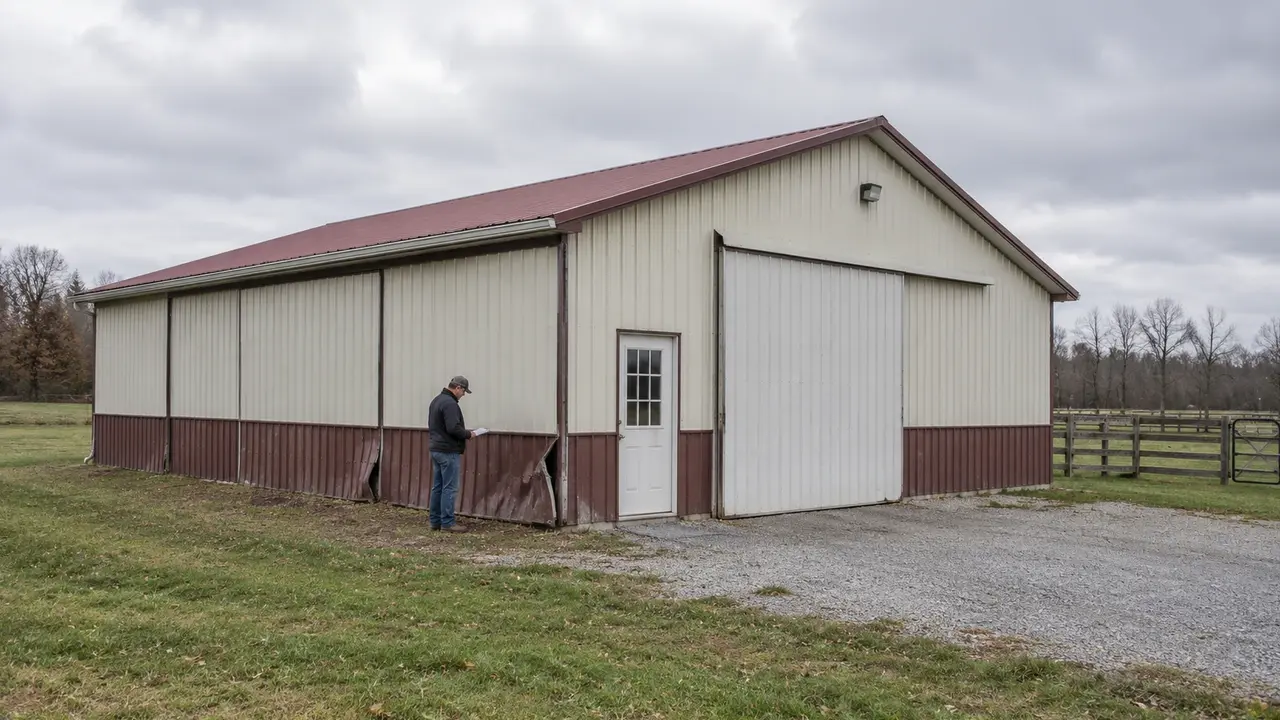
A repair begins with symptoms and their history. Tell us where water appears, when the door started binding, whether damage followed an impact or storm, and whether it has changed over time. Photographs from a safe position help establish the initial scope. A dented panel is different from a shifted frame, even when both are first noticed at the same wall.
The visible damaged material may not be the source of the problem. Water can travel from a roof transition before showing inside, and poor drainage can affect lower walls or support areas. Inspect the surrounding assembly rather than replacing only the most obvious surface. Where movement, significant deterioration, or uncertain supports are involved, the next step may be professional structural evaluation rather than immediate cosmetic repair.
Diagnosing Pole Barn Panel Damage & Structural Movement
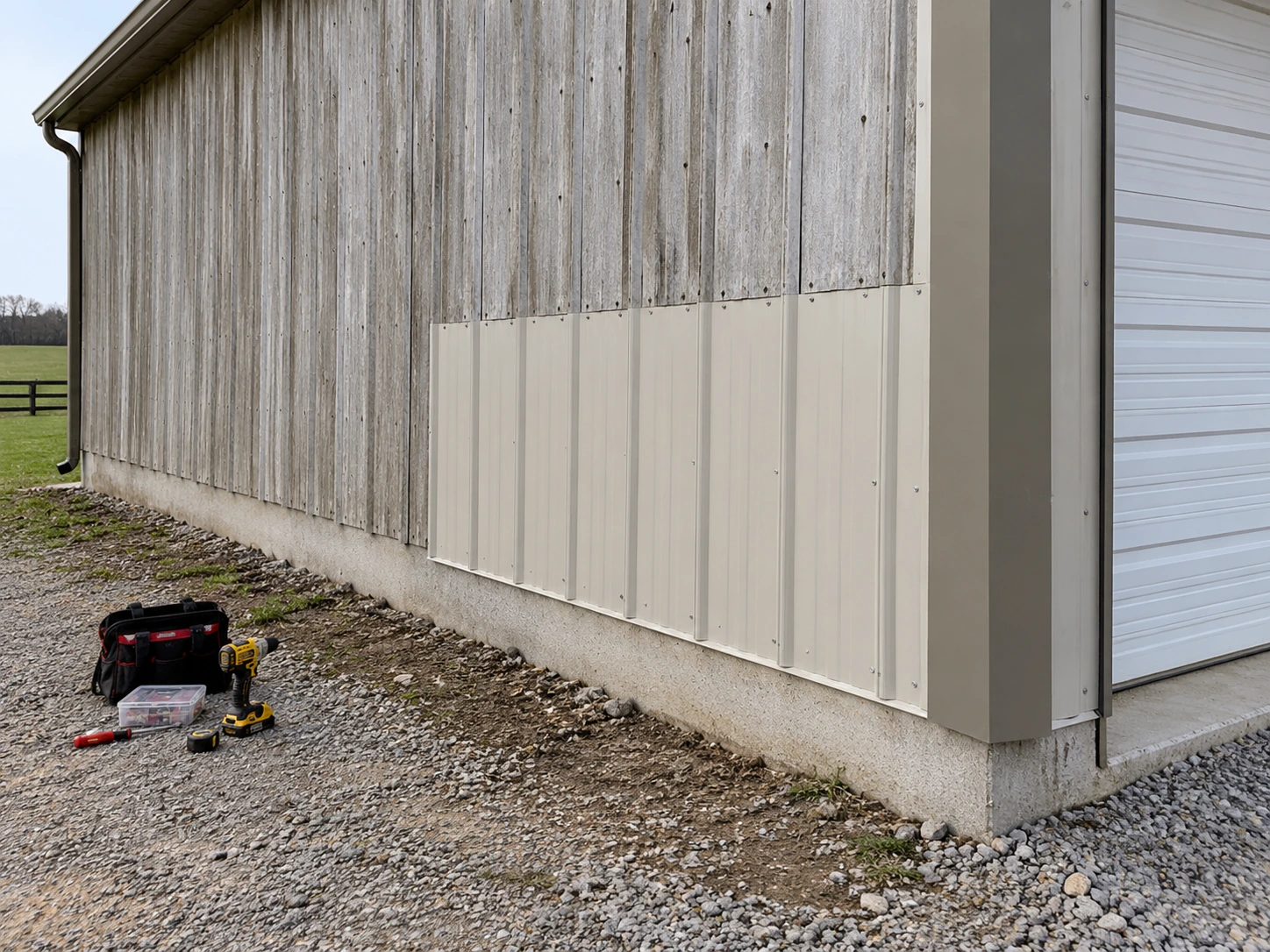
Metal siding, trim, flashing, and door components can suffer localized damage while the main structure remains serviceable. Panel profile, thickness, finish, and attachment need to be identified so replacements are compatible. Inspect the backing and nearby framing before covering the area. A new panel attached to deteriorated support does not resolve the underlying condition.
Misaligned doors, changing gaps, visibly distorted framing, or deterioration at columns call for closer investigation. Do not force a door or remove structural members to make an opening look square. The safe repair method depends on the cause and the load path. When structural work is needed, the scope should identify the evaluation, design, temporary support, and construction responsibilities clearly.
Tracing Barn Leaks Through Roofing, Walls & Ground Drainage
Roof fasteners, laps, penetrations, flashing, ridge details, gutters, and wall transitions can all be relevant to water entry. Interior stains should be related to the exterior condition and the circumstances when they appear. Wind-driven rain and condensation can complicate diagnosis. A surface sealant should not be treated as a universal repair for incompatible flashing, damaged panels, or a poorly performing assembly.
At ground level, check grade, roof-water discharge, vegetation, stored material against walls, and ponding. These conditions can keep parts of the building wet even after a roof leak is corrected. Repairs may need to include drainage adjustments or changes to how the area is used. Identify those limits in the scope so a panel replacement is not expected to solve an unrelated site-water problem.
Repairing Pole Barn Doors Around the Existing Opening
Sliding and overhead doors have different components and failure modes. Tracks, rollers, guides, operators, seals, framing, and alignment need inspection appropriate to the system. Record whether the problem occurs throughout travel or only at one point. Include the door's approximate size and photographs of the whole opening rather than only a close-up of a damaged handle.
A replacement door may need different support or clearance from the original. Coordinate its requirements before ordering, especially if the opening is being enlarged. Removing a post or widening a bay can change the structure and should not be treated as ordinary trim work. Decide whether the objective is to restore the original operation or create a different opening for larger equipment.
Comparing Selective Barn Repairs with Component Replacement
Selective repair can make sense when damage is localized and the surrounding materials remain suitable. Broader replacement may be worth evaluating when problems recur across an assembly, compatible parts are unavailable, or access costs make piecemeal work inefficient. Compare the actual condition and remaining scope rather than assuming replacement is always better or repair is always cheaper.
Color matching can be imperfect on weathered metal. Existing coatings may have faded, and profiles may have changed. Review samples and the extent of visible replacement before deciding how important an exact match is. A deliberate repair boundary or larger panel grouping can sometimes look more coherent, but appearance should follow the primary need to restore weather protection and appropriate support.
Protecting Stored Contents During Pole Barn Repair Work
Repair access may require moving vehicles, tools, feed, or stored material away from the affected area. Decide who handles relocation and temporary protection. Weather windows, material procurement, and the sequence for opening and closing the envelope affect scheduling. An operating farm or business may need staged repairs to keep essential access available while work is underway.
Ask for a written description of the observed issue, proposed repair, materials, excluded work, and any conditions that require further investigation. Concealed damage can change the scope once materials are removed. Agree on how that finding will be documented and priced before proceeding. Where permits or professional review apply, identify the responsibility rather than assuming all repair work is exempt.
Pole Barn Repair Specifications for Replacement Parts & Structural Connections
Replacement panels that fit the original profile
Record rib shape, panel coverage, coating, fastener layout, and trim condition before ordering replacements. Identify the original product where possible, including the specific profile within a range such as McElroy Metal Max-Rib, because similar color or nominal width does not establish compatibility with the existing roof or wall.
Engineered post and connection repair details
A deteriorated post base or displaced connection needs an assessment of both the damage and the loads it carries. Any splice, bracket, or replacement support should follow a project-specific detail, with fasteners and corrosion protection selected for the remaining timber and its exposure.
Flashing, closures and targeted water-control repairs
Roof leaks may involve failed closures, penetrations, laps, or adjacent drainage rather than the visible wet spot alone. Specify the repaired assembly and compatible sealants or fasteners after diagnosis, and make temporary weather protection part of the scope where the repair opens the building envelope.
Lexington Pole Barn Repairs: Existing-Building Review & Recurring Damage
Repair scope determines the review discussion
Use photographs and a written description to distinguish cladding maintenance from structural alteration or a change of use. Confirm the existing-building review applicable to the Lexington project before replacing load-bearing components rather than assuming all repair work follows the same permit path.
Historic overlays can matter even on an existing structure
If a barn is within a Lexington local historic district, exterior work may need a certificate of appropriateness. Establish the applicable approval before changing visible roofing, siding, openings, or demolition scope, especially when the repair would alter the building’s original appearance.
Correct the condition that keeps damaging the building
Inspect gutter discharge, ground levels, door tracks, and past alterations alongside the failed component. For a Lexington repair brief, include when damage appeared and whether it followed storms or gradually worsened; those observations help separate a one-time event from recurring water or movement problems.
Pole Barn Repair Questions About Damage & Next Steps
Practical answers to help you organize the next conversation.
Can you identify a repair from photographs alone?
Photos can help narrow the initial discussion, but they may not reveal concealed supports, water paths, or movement. Send wide views and details taken safely from the ground. An on-site assessment may still be needed before a dependable scope can be defined. Avoid climbing onto a damaged roof or disturbing questionable framing just to obtain a closer picture.
Will a new siding panel match the old finish exactly?
An exact match may not be possible because of weathering, fading, profile changes, or discontinued material. Compare the available options before ordering. The proposal should identify the planned replacement area and any appearance limitations. Compatible installation and weather protection matter alongside color, especially where new panels meet existing trim or openings.
Why does a repaired leak sometimes return?
The original repair may have addressed a symptom while leaving the water path or assembly problem unresolved. Multiple entry points, condensation, or drainage can also contribute. Diagnose when and where moisture appears and inspect the surrounding roof and wall details. Repeatedly applying sealant without investigating the cause can delay a more appropriate repair.
Can an old pole barn be repaired for a new use?
Possibly, but restoring the building and changing its use are separate evaluations. New occupancy, heating, equipment, ceilings, or door openings can introduce additional requirements. Describe the final intended use before pricing repairs. It may be more efficient to coordinate the repair and adaptation together than to restore details that will soon need alteration.
What should I include in a repair inquiry?
Provide the location, approximate building age and size, symptoms, when they began, and safe photographs of the affected area and whole building. Include any original drawings or previous repair information. Tell us whether the building must remain in use so access, contents protection, investigation, and scheduling can be discussed from the beginning.
Do structural pole barn repairs in Lexington need the same review as replacing siding?
Not necessarily. Describe the affected members, connections, and intended changes to Building Inspection so the review is based on the actual scope. Cosmetic panel work, structural replacement, and a new use can raise different questions even when they occur on the same barn.
Should repeated leaks after Lexington storms be repaired only at the wet spot?
Start by tracing the water route and checking surrounding roof, wall, and drainage details. Water can travel before it becomes visible indoors; documenting the storm direction and affected areas can help the inspection identify the source and avoid repeating a repair that leaves the underlying condition in place.
Talk through your building requirements.
Share your property location, intended use, approximate size, and the features that matter most. Photos, equipment dimensions, and a simple site sketch help us begin a useful conversation about the work involved.